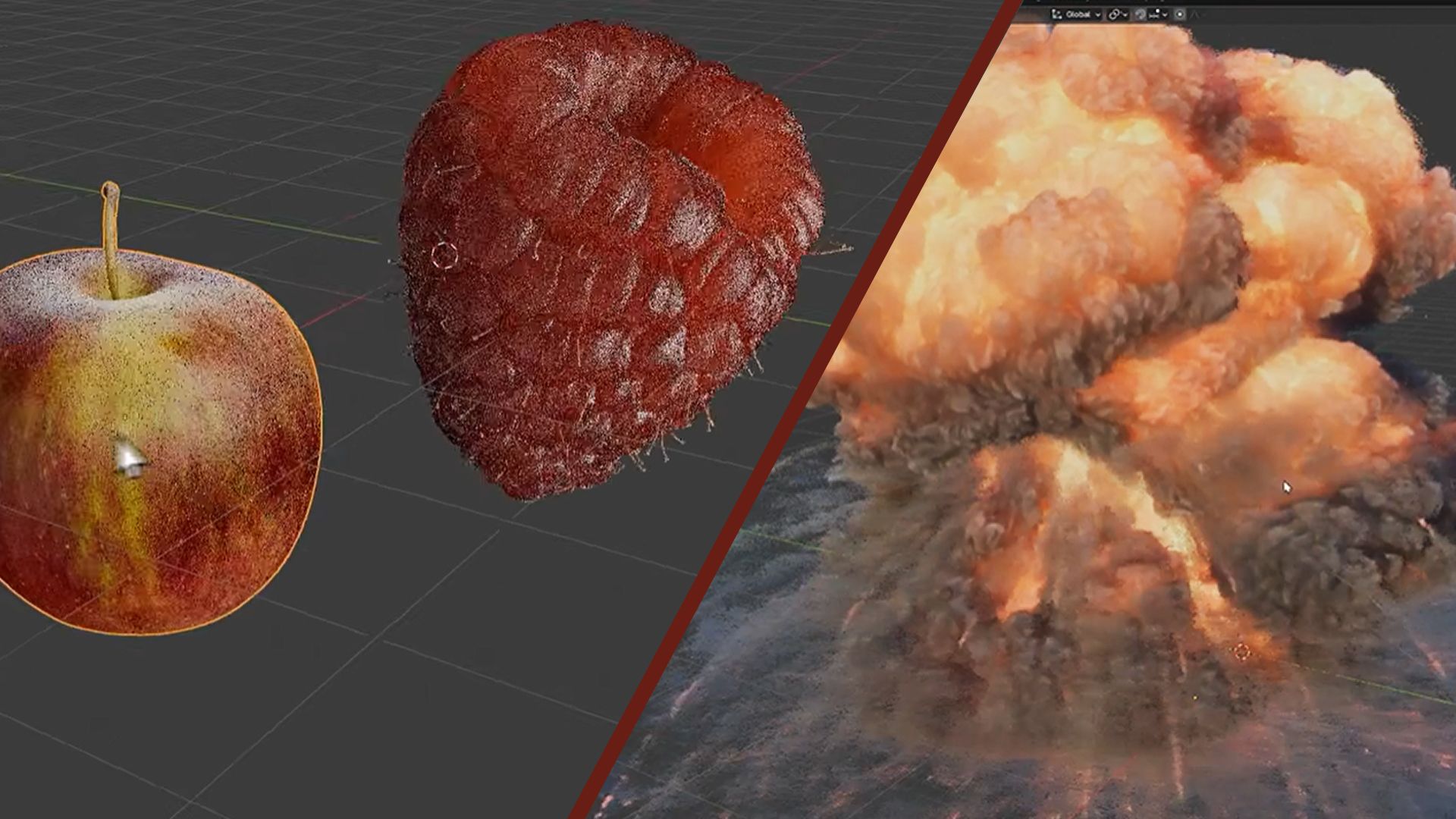
Blender 5.3 Adds Native Support for Gaussian Splatting
Blender 5.3 now lets users import and render Gaussian Splat data directly, enabling photorealistic scenes from photos without external tools.
Blender 5.3, currently in alpha and slated for a November release, introduces native support for Gaussian Splatting.
Gaussian Splatting is a recent 3‑D technique that reconstructs real‑world objects from ordinary photos or videos using millions of tiny, overlapping colored blobs. Each blob stores position, size, color, and transparency, creating a highly detailed point‑cloud representation.
Previously, Blender required third‑party tools such as Brush or COLMAP to generate .ply files, which were then imported via add‑ons. The new update allows direct import of PLY and SPZ files and renders them with Workbench, EEVEE, and Cycles.
Current limitations include sub‑optimal performance, an assumption of sRGB color space, and incorrect rendering in low‑opacity/high‑radiance areas because Cycles and EEVEE operate in linear space. Transform operations (scale, rotation, spherical harmonics) are not yet fully supported.
For designers, animators, and builders, this feature opens a new workflow for creating realistic scenes from simple photographs, useful in architecture visualization, game prototyping, and digital art. Future releases are expected to add export options, performance improvements, and expanded tool support. Check out demo videos from CGMatter and VFX artist Jason Key for practical examples.