Bamboo’s Versatility: Seven Buildings Showcasing the Fast‑Growing Plant
Bamboo, a rapidly renewable material, is being used in creative ways across South and Southeast Asia. Seven projects—from meditation centers to student hubs—demonstrate how bamboo can shape architecture, education, and community spaces.
Bamboo’s green, renewable nature has made it a popular alternative to traditional building materials. The projects highlighted in this roundup span Nepal, India, Indonesia, Pakistan, and Malaysia, each illustrating a different use of the plant.
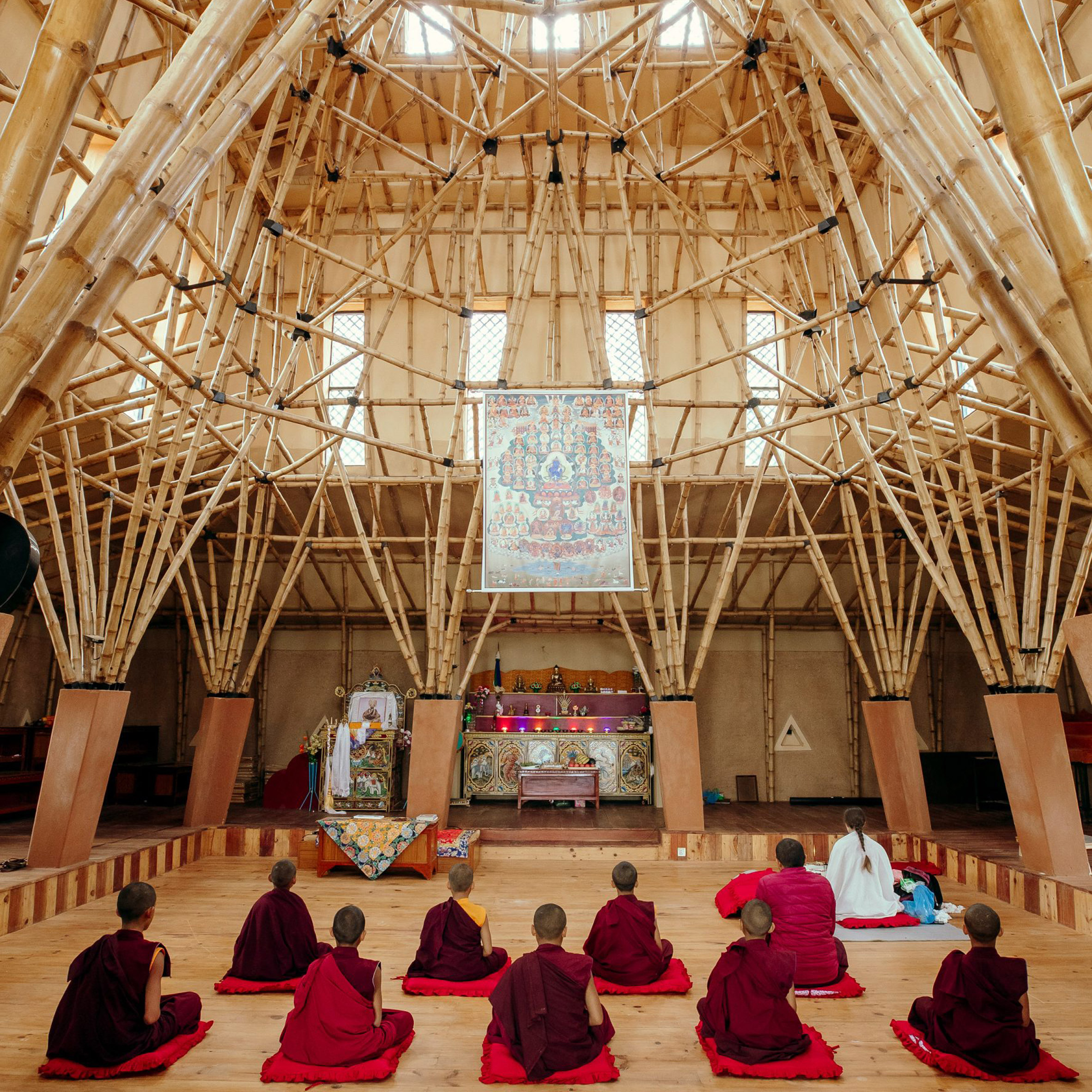
The Mahamudra Meditation Centre in Nepal, designed by Abari, features a mandala‑shaped bamboo truss that crowns a 15‑metre meditation hall perched on a mountain. The centre also houses a dining hall and guest rooms.
In India, The Purple Ink Studio created the Tapmi Centre for a business school, covering a sunken amphitheatre with a canopy of bamboo parasols. The space serves as a communal hub for 30,000 students.
Indonesia’s Living Bridge, built by Jonathan Mizzi with more than 300 heat‑bent bamboo pieces, offers a flexible learning centre that is partly open to the elements.
Other projects include the Chicken Hero Pavilion, a bamboo chicken coop disguised as an artificial hill in Jakarta; Intaaya Retreat on Nusa Penida, where undulating bamboo roofs echo seashells and manta rays; the Juliet Centre in Pakistan, a vaulted bamboo structure for community workshops; and Anjung in Malaysia, a two‑storey house and studio shaded by a bamboo and green‑painted steel canopy.
For designers, these examples show that bamboo can serve both structural and aesthetic roles while keeping carbon footprints low. Its rapid growth and flexibility allow for innovative forms and adaptable spaces. Looking ahead, more projects are likely to explore bamboo’s potential, especially in regions seeking sustainable, cost‑effective building solutions.